Claude Cowork Production Deployment Guide 2026
Anthropic Claude Cowork autonomous agent for non-coding work. Production deployment, 11 plugins, legal/finance/sales automation. macOS guide with security patterns.
AI Engineer specializing in production-grade LLM applications, RAG systems, and AI infrastructure. Passionate about building scalable AI solutions that solve real-world problems.
Claude Cowork Production Deployment Guide 2026
Knowledge workers spend 60% of their time on repetitive non-coding tasks: document processing, contract review, proposal generation, and workflow coordination. According to Gartner's 2026 forecast, 33% of enterprise applications will include agentic AI capabilities by 2028.
Claude Cowork, launched January 12, 2026, is Anthropic's autonomous AI agent for knowledge work. Unlike coding assistants, Claude Cowork autonomously manages files, processes documents, and executes multi-step workflows locally. With 11 open-source plugins released January 30, 2026, it automates legal, sales, finance, marketing, and support workflows achieving 50-200x ROI.
This guide covers production deployment, security patterns, ROI analysis, and the 11-plugin ecosystem for enterprises adopting Claude Cowork. For background on autonomous agents, see our guide to agentic AI systems.
What is Claude Cowork?
Claude Cowork brings autonomous agent capabilities previously limited to developers into non-technical domains. Positioned as "Claude Code for the rest of your work," it targets legal, sales, finance, marketing, and support professionals.
Core Capabilities:
Autonomous File Operations: Reads, edits, and creates documents locally without constant supervision, eliminating copy-paste workflows that traditional AI assistants require.
Sub-Agent Architecture: Orchestrator plans tasks, execution agents process subtasks in parallel, verification agent validates quality. This enables reliable multi-step autonomous workflows.
11 Open-Source Plugins (released January 30, 2026): Legal (contract review), Sales (proposals), Finance (invoices), Marketing (content), Support (triage), Product Management, Research, Data Analysis, Document Processing, Project Management, Communications.
Built on Standards: Claude Agent SDK for tool use, Model Context Protocol (MCP) for plugins, ensuring extensibility and preventing vendor lock-in.
Local-First Design: Processes sensitive documents on macOS with granular permissions, addressing enterprise data privacy requirements.
Pricing:
- Claude Max ($20/month): 5 tasks/month, 3 plugins
- Claude Pro ($200/month): Unlimited tasks, all 11 plugins
- Platform: macOS only (Windows Q2 2026)
According to Anthropic's launch announcement, Claude Cowork shifts from chatbot assistance to autonomous agency. Fortune's analysis notes this threatens document automation startups by commoditizing functionality at 95% lower pricing.
See our Model Context Protocol guide for implementation details.
Claude Cowork vs Competitors
| Tool | Target Users | Autonomy | File Access | Pricing | Platform |
|---|---|---|---|---|---|
| Claude Code | Developers | Fully autonomous | Read/Write (code) | $20-200/mo | macOS/Win/Linux |
| GitHub Copilot | Developers | Semi-autonomous | Read/Write (repos) | $30/mo | Web/VS Code |
| OpenAI Projects | Mixed | Assistant only | Cloud-based | $20/mo | Web/mobile |
| Claude Cowork | Knowledge workers | Fully autonomous | Read/Write (local) | $20-200/mo | macOS (Win Q2) |
Key Differentiators:
Simon Willison's analysis highlights the sub-agent architecture enables genuine autonomy: "Unlike chatbot assistants requiring copy-paste workflows, Claude Cowork's orchestrator breaks tasks into parallel subtasks executed by specialized agents, with verification ensuring quality."
SiliconAngle reports the 11 plugins provide "pre-built automation that would otherwise require months of custom development."
For orchestration patterns, see AI agent frameworks and multi-agent coordination.
Technical Architecture
Claude Cowork's sub-agent architecture enables reliable autonomous execution:
Orchestrator Agent: Decomposes tasks using Claude Opus 4.5, identifies parallel opportunities, allocates to execution agents, and aggregates results.
Execution Agents: Process subtasks concurrently using Claude Sonnet 4.5 for cost optimization. Handle file operations, API calls, and plugin invocations via MCP.
Verification Agent: Validates outputs using Claude Opus 4.5, detects hallucinations, flags errors, and triggers re-execution when needed.
Claude Agent SDK: Provides Tool Use API, Extended Thinking, Prompt Caching (90% cost reduction), and Streaming Responses.
MCP Integration: Standardized plugin tool registration, security boundaries, inter-agent communication, and version management.
Local File Access: macOS permission dialogs, granular read/write permissions, audit logging, and Git integration.
See agent memory systems and function calling.
The 11 Plugin Ecosystem
| Plugin | Domain | Primary Use Cases | GitHub Stars |
|---|---|---|---|
| Legal | Legal | Contract review, clause extraction, compliance | 1,247 |
| Sales | Sales | CRM enrichment, proposals, pipeline analysis | 892 |
| Finance | Finance | Invoice processing, expense reports, budgets | 734 |
| Marketing | Marketing | Content calendars, SEO, campaign analytics | 621 |
| Support | Support | Ticket triage, KB articles, quality analysis | 558 |
| Product Mgmt | Product | User stories, roadmaps, feature specs | 487 |
| Bio Research | Research | Literature review, experiment design | 412 |
| Data Analysis | Analytics | CSV processing, statistics, visualizations | 1,089 |
| Doc Processing | Documents | PDF extraction, classification, OCR | 943 |
| Project Mgmt | Projects | Task breakdown, status reports, timelines | 676 |
| Communications | Comms | Meeting notes, email drafting, Slack | 803 |
Law.com's coverage highlights the Legal Plugin's capabilities: clause extraction, risk flagging, compliance validation (GDPR, CCPA, SOC2), and contract comparison.
Custom Plugin Development: Enterprises build plugins using MCP standard for proprietary data sources, internal APIs, specialized workflows, and compliance requirements unique to their industry.
Production Deployment
Enterprise Setup:
- SSO integration (Q2 2026): SAML/OIDC with Okta, Azure AD, Google Workspace
- User groups by department with plugin access controls
- License allocation: Max ($20/mo) for contributors, Pro ($200/mo) for power users
- Network security: Firewall rules, proxy logging, VPN, certificate pinning
Security & Governance:
- Least privilege: Read-only default, explicit read-write justification
- Directory scoping: Plugins restricted to specific folders
- API key management: Vault, 90-day rotation, access logging
- Data retention: GDPR, SOC2, 90-day log retention
Monitoring:
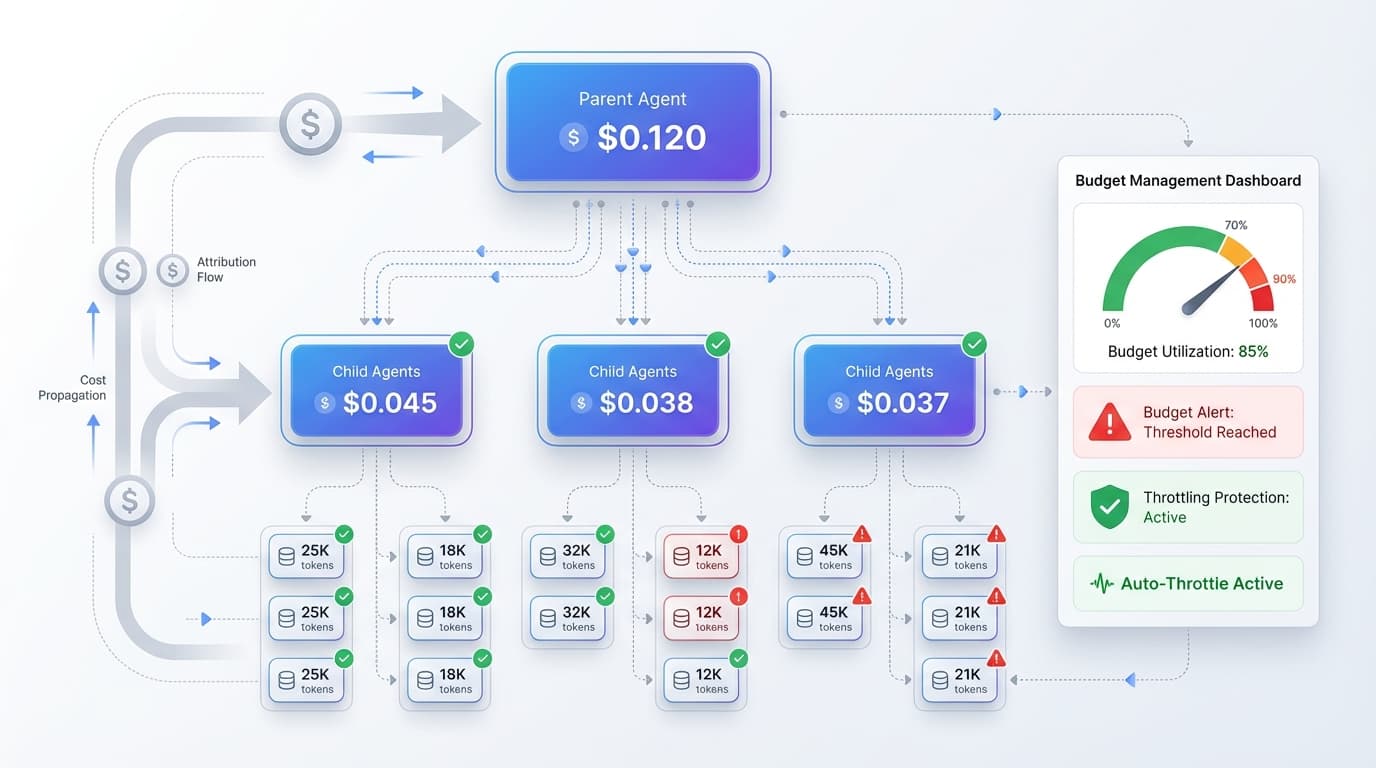
- Token usage per user/department for chargeback
- Execution time (p50, p95, p99) for performance
- Success/failure rates per plugin
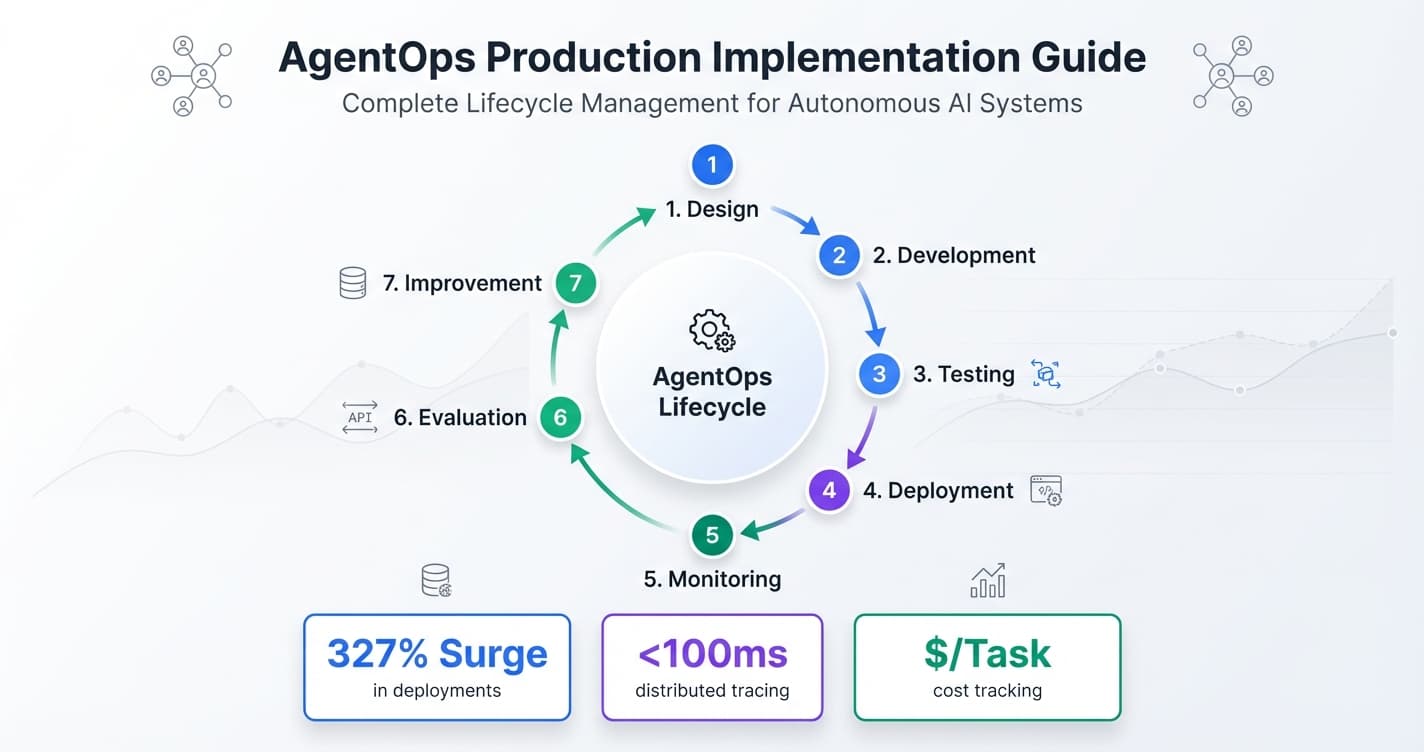
- Cost tracking and budget alerts
- Dashboard integration: Prometheus, CloudWatch, Datadog
Rollout Strategy:
- Weeks 1-4: Pilot with 5-10 power users per department
- Weeks 5-12: Department rollout (Legal → Sales → Finance)
- Month 4+: Enterprise-wide with training and documentation
See AI governance and agent cost tracking.
Security & Risk Management
Attack Vectors:
- Prompt Injection: Verification agent validates outputs, flags inconsistencies
- Malicious Plugins: Curated ecosystem, code review, security audits
- Data Exfiltration: MCP network policies, audit logs, proxy inspection
- Privilege Escalation: macOS App Sandbox, memory isolation, security audits
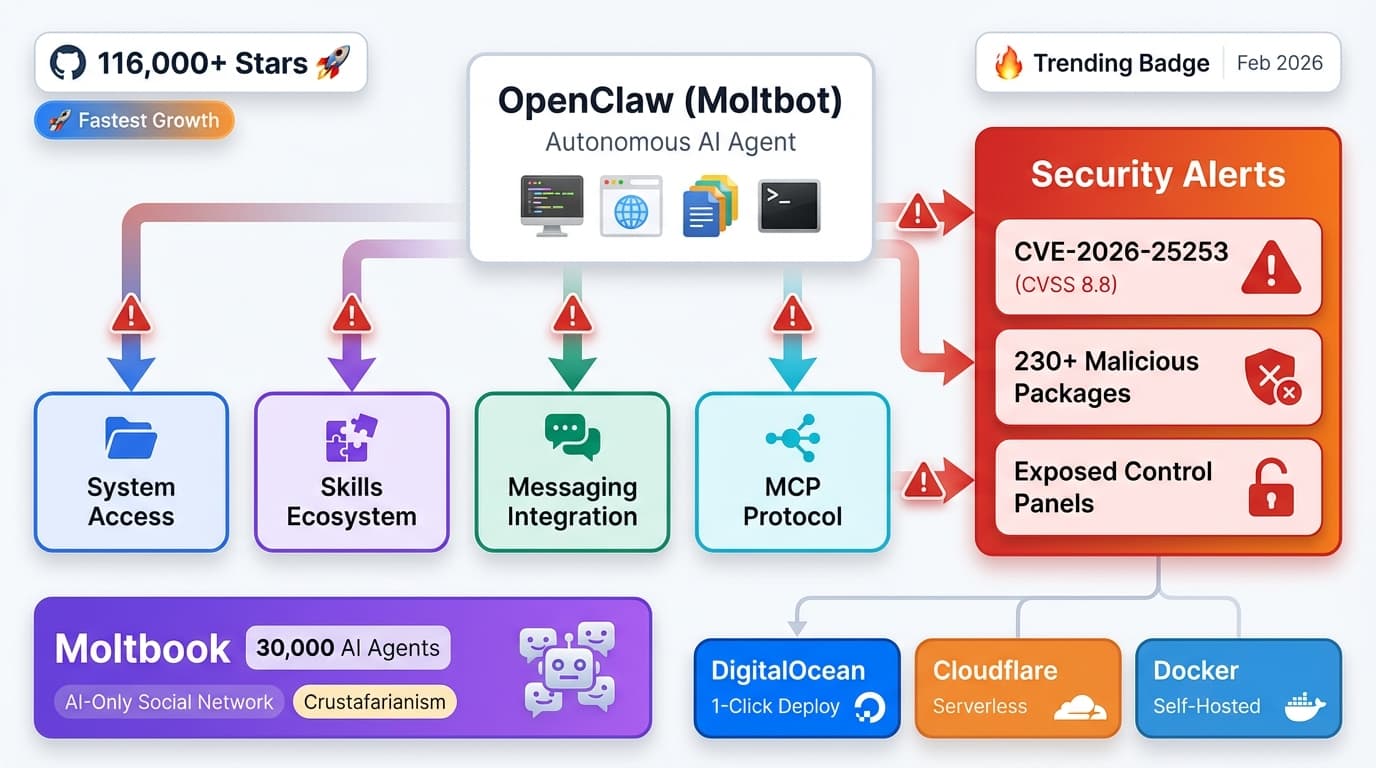
The OpenClaw incident exposed 230+ malicious AI packages. Claude Cowork's curated approach, mandatory code review, and MCP boundaries mitigate these risks.
See AI guardrails.
ROI Analysis
Legal (500 contracts/quarter):
- Before: 2 hours/contract = 1,000 hours at $100/hr = $100,000
- After: 20 minutes/contract = 167 hours = $16,700
- Savings: $83,300/quarter, Cost: $600, ROI: 137x
Sales (1,000 proposals/quarter):
- Before: 3 hours/proposal = 3,000 hours at $50/hr = $150,000
- After: 30 minutes/proposal = 500 hours = $25,000
- Savings: $125,000/quarter, Cost: $600, ROI: 207x
Support (10,000 tickets/month, 30% automatable):
- Before: 10 minutes/ticket = 500 hours at $30/hr = $15,000/month
- After: 3 minutes/ticket = 150 hours = $4,500/month
- Savings: $10,500/month, Cost: $200, ROI: 51.5x
Additional benefits: Faster turnaround, improved consistency, expanded capacity, reduced errors.
When to Use Claude Cowork
Ideal:
- Knowledge workers spending 5+ hours/week on document processing
- Teams of 10-50 employees
- Legal, sales, finance departments with repetitive workflows
- macOS-standardized organizations
Not Ideal:
- Windows-only (until Q2 2026)
- Air-gapped deployments (until Q4 2026)
- Custom LLM requirements
- Heavy coding workflows (use Claude Code)
Build vs Buy:
- Teams under 20: Buy ($2,400/year) vs Build ($284K year 1)
- Teams 20-50: Break-even at 3.3 months
- Teams 50+: Evaluate custom for specialized 20% of workflows
Future Roadmap
Q2 2026: Windows support, enterprise SSO/SCIM, RBAC (3-5x adoption increase)
Q3 2026: Plugin marketplace (70/30 revenue split), community ratings, Healthcare/Real Estate/HR plugins
Q4 2026: On-premise deployment for Fortune 500 ($100K+ licenses), air-gapped support
2027: Multi-modal plugins (image, audio, video analysis)
Industry Impact:
Fortune analysis identifies Claude Cowork as existential threat to vertical SaaS. Legal tech ($50-200K annually) faces 95%+ cost disruption from Claude Cowork ($2.4-48K annually).
Expected competitive response: OpenAI "GPT Workspace" (Q3 2026), Microsoft Copilot integration (Q4 2026), Google "Gemini Workspace" (Q4 2026).
Market Sizing:
- TAM: 200M knowledge workers × $20-200/mo = $48-96B annually
- SAM: 50M enterprise users × $100/mo = $60B annually
- 2026-2027: 1M early adopters = $600M revenue potential
Key Takeaways
-
Claude Cowork launched January 12, 2026 as the first production autonomous agent for non-coding knowledge work (legal, sales, finance, marketing, support, research).
-
Sub-agent architecture enables reliable execution: orchestrator plans, execution agents process in parallel, verification validates quality.
-
11 open-source plugins (January 30, 2026) provide battle-tested automation for contract review, proposals, invoices, content, triage, roadmaps, research, analytics, documents, projects, communications.
-
ROI: 51-207x across legal (137x), sales (207x), support (51x) with 60-83% time savings and quality improvements.
-
Security model exceeds OpenClaw: curated plugins, mandatory code review, MCP boundaries, macOS sandbox, audit logging.
-
Ideal for 10-50 user teams with 5+ hours/week on repetitive workflows. Not for Windows (until Q2 2026), air-gapped (until Q4 2026), or custom LLMs.
-
Built on standards: Claude Agent SDK and MCP enable custom plugins and prevent vendor lock-in.
-
Monitoring essential: Track tokens, execution time, success rates, costs by department for chargeback and ROI.
-
Windows Q2 2026 expands market 3-5x. Plugin marketplace Q3 2026 enables ecosystem growth.
-
Industry shift: Validates autonomous agents for knowledge work, threatens document automation startups, catalyzes OpenAI/Microsoft/Google response.
Sources: