Agentic AI Production 2026: Multi-Agent Deployment & Interoperability Guide
Master production agentic AI deployment with AAIF, A2A protocol, and interoperability standards. Real-world patterns, code examples, and production checklist.
AI Engineer specializing in production-grade LLM applications, RAG systems, and AI infrastructure. Passionate about building scalable AI solutions that solve real-world problems.
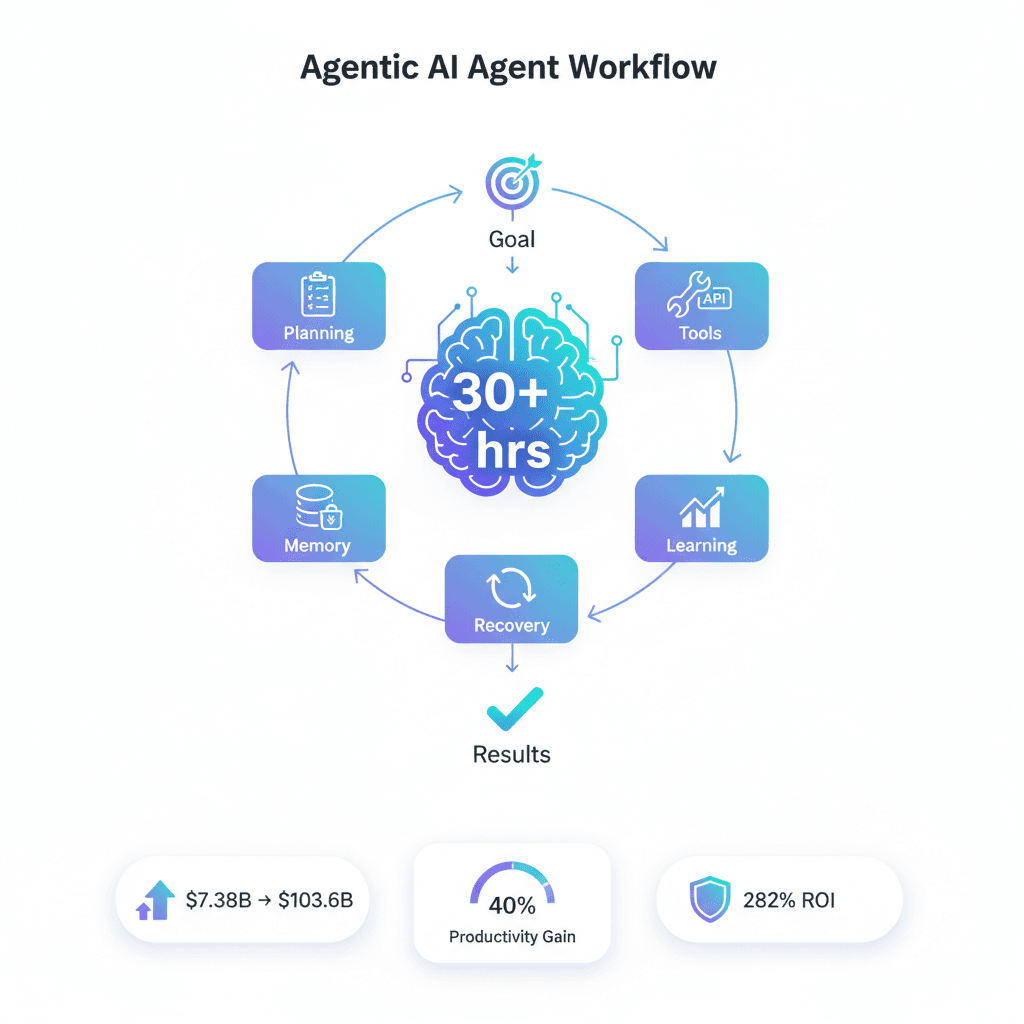
2026 marks the inflection point for agentic AI: the year when autonomous agents transition from impressive demos to mission-critical production systems. Yet a stark deployment gap threatens this evolution—while 30% of organizations are actively exploring agentic AI, only 14% have solutions ready for production deployment, according to recent industry surveys. More concerning, Gartner predicts that 40% of agentic AI projects will be canceled by the end of 2027 due to escalating costs, unclear business value, or inadequate risk controls.
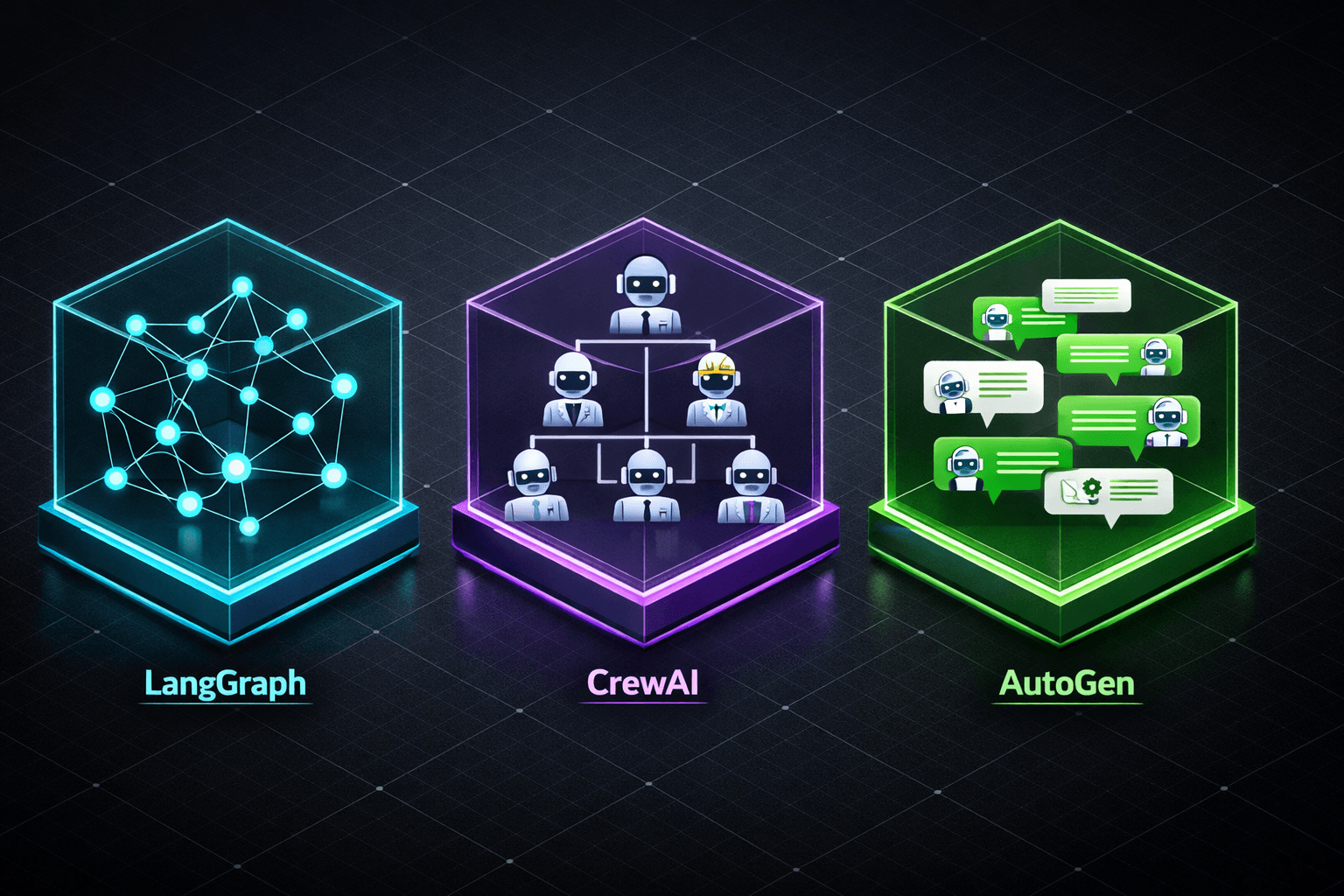
The challenge isn't technical capability. Modern frameworks like LangGraph, CrewAI, and AutoGen have matured significantly. Instead, the bottleneck is interoperability—connecting agents to tools, data sources, and each other across organizational boundaries. This is where 2026's breakthrough arrives: the Linux Foundation's Agentic AI Foundation (AAIF), the Agent2Agent (A2A) protocol, and the Model Context Protocol (MCP) working in concert to standardize how autonomous agents communicate, access context, and coordinate at scale.
This guide provides production engineers and technical leaders with practical deployment patterns, interoperability standards, and a battle-tested checklist to navigate the pilot-to-production journey successfully in 2026.
The Production Deployment Gap
The disconnect between pilot success and production failure reveals deep architectural misalignments. In controlled environments, agentic systems demonstrate impressive autonomy—research agents synthesizing reports, code agents shipping features, sales agents handling customer inquiries. Deploy these same agents into production, and they encounter real-world complexity that demo environments never surfaced.
Why Agents Fail in Production:
Three systemic failure modes dominate:
-
Context fragmentation: Agents lose access to critical tools and data when crossing organizational boundaries. A research agent trained on internal documentation can't access external APIs without custom integrations for each service.
-
Cost spiral: What costs $50 in Claude Opus API calls during a pilot balloons to $50,000/month in production at scale. Without proper caching, prompt optimization, and request batching, LLM costs become unsustainable.
-
Coordination breakdown: Multi-agent systems that work flawlessly with 3 agents collapse when scaled to 10+. Without standardized communication protocols, each agent-to-agent interaction requires custom integration code.
The statistics bear this out: industry data shows 86% of pilot projects use single-agent architectures, while production systems require multi-agent coordination. The shift from "one smart agent" to "teams of specialized agents" introduces exponential integration complexity without interoperability standards.
The Human-AI Collaboration Shift:
2026 represents a maturation of expectations. Rather than pursuing full autonomy—agents making all decisions independently—successful deployments emphasize human-AI collaboration. Agents handle well-defined subtasks (data retrieval, analysis, draft generation) while humans maintain oversight for strategic decisions.
This shift reduces risk, improves auditability, and accelerates production adoption. Gartner predicts that by 2028, 15% of day-to-day work decisions will be made autonomously through agentic AI—a measured, sustainable growth trajectory from near-zero in 2024.
2026 Ecosystem Evolution: AAIF & Interoperability Standards
The formation of the Linux Foundation's Agentic AI Foundation (AAIF) in December 2025 marks a watershed moment for production agentic AI. Co-founded by Anthropic, Block, and OpenAI—competitors united by the recognition that interoperability is essential—AAIF provides governance for critical protocols enabling cross-platform agent coordination.
Linux Foundation's Agentic AI Foundation (AAIF)
Anthropic's donation of the Model Context Protocol (MCP) to AAIF represents the first major protocol standardization. MCP defines how AI agents access external tools and data sources through a unified interface, eliminating the need for custom integrations per service.
Key AAIF initiatives for 2026:
- Protocol standardization: MCP for context access, A2A for agent-to-agent communication
- Multi-vendor interoperability: Agents built on different frameworks (LangGraph, CrewAI, AutoGen) can communicate
- Security and compliance frameworks: Shared standards for authentication, authorization, and audit logging
- Vendor-neutral governance: Ensuring no single company controls critical infrastructure
The impact is immediate: since MCP's release in November 2024, developers have built thousands of MCP servers integrating services like Google Drive, Slack, GitHub, Postgres, and Puppeteer. AAIF's governance ensures these integrations work across all agent frameworks, not just Anthropic's Claude.
Agent2Agent (A2A) Protocol
While MCP handles agent-to-tool communication, the Agent2Agent protocol (developed by Salesforce and Google Cloud) standardizes agent-to-agent communication across platforms. This enables Salesforce Agentforce agents to coordinate with Google Vertex AI Agent Builder agents without custom integration code.
A2A Protocol Handshake Example:
from anthropic import Anthropic
import httpx

class A2AAgent:
    """Agent capable of A2A protocol communication"""

    def __init__(self, agent_id: str, endpoint: str):
        self.agent_id = agent_id
        self.endpoint = endpoint
        self.client = Anthropic()

    async def send_message(self, target_agent_id: str, task: dict):
        """Send task to another agent via A2A protocol"""
        message = {
            "protocol": "A2A/1.0",
            "from_agent": self.agent_id,
            "to_agent": target_agent_id,
            "task": task,
            "capabilities": ["text_analysis", "code_generation"]
        }

        async with httpx.AsyncClient() as client:
            response = await client.post(
                f"{self.endpoint}/agents/{target_agent_id}/tasks",
                json=message,
                headers={"Content-Type": "application/json"}
            )
            return response.json()
This handshake enables cross-platform coordination—a Salesforce sales agent can delegate research tasks to a Google Cloud analytics agent, receive structured results, and continue its workflow seamlessly.
MCP as the Interoperability Layer
MCP extends beyond tool access to enable multi-agent coordination through shared context. When multiple agents need access to the same data sources (customer database, documentation repository, analytics API), MCP servers provide a unified interface.
Integration with Agent Frameworks:
All major frameworks support MCP integration:
- LangGraph: Agents use MCP tools as standard function calls within state graphs
- CrewAI: Tools defined via MCP are automatically available to all crew members
- AutoGen: MCP servers integrate as conversation-aware tools
This universal compatibility is AAIF's value proposition—build once, deploy across any agent framework.
Production Deployment Patterns
Production multi-agent systems require architectural patterns that balance autonomy, coordination overhead, and fault tolerance. Three dominant patterns have emerged from early 2026 deployments:
Pattern 1: Hierarchical Orchestration
A manager agent delegates tasks to specialized worker agents, aggregates results, and maintains overall workflow state. This pattern works well for complex workflows with clear decomposition (research → analysis → synthesis → report).
LangGraph Multi-Agent Orchestration Example:
from langgraph.graph import StateGraph, END
from typing import TypedDict, Annotated

class AgentState(TypedDict):
    task: str
    research_results: str
    analysis: str
    final_output: str

def research_agent(state: AgentState):
    """Agent 1: Gather information"""
    # MCP server call for web search
    results = mcp_client.call_tool("web_search", query=state["task"])
    return {"research_results": results}

def analysis_agent(state: AgentState):
    """Agent 2: Analyze findings"""
    analysis = claude_client.generate(
        prompt=f"Analyze: {state['research_results']}"
    )
    return {"analysis": analysis}

def synthesis_agent(state: AgentState):
    """Agent 3: Generate final output"""
    output = claude_client.generate(
        prompt=f"Synthesize report from: {state['analysis']}"
    )
    return {"final_output": output}

# Build orchestration graph
workflow = StateGraph(AgentState)
workflow.add_node("research", research_agent)
workflow.add_node("analysis", analysis_agent)
workflow.add_node("synthesis", synthesis_agent)

workflow.add_edge("research", "analysis")
workflow.add_edge("analysis", "synthesis")
workflow.add_edge("synthesis", END)
workflow.set_entry_point("research")

app = workflow.compile()
When to use: Sequential workflows, tasks with clear stages, centralized quality control.
Pattern 2: Peer-to-Peer with A2A Protocol
Agents communicate directly using A2A protocol, negotiating task delegation without central coordination. This enables horizontal scaling—add more agents to handle increased load without bottlenecks.
When to use: High-throughput systems, distributed teams of agents, dynamic task allocation.
Pattern 3: Federated Agent Networks
Multiple organizations deploy agents behind secure boundaries, coordinating through AAIF protocols. A bank's fraud detection agents can query an external credit bureau's agents via MCP without direct database access.
When to use: Cross-organizational workflows, regulatory compliance requirements (GDPR, HIPAA), zero-trust architectures.
| Pattern | Coordination | Fault Tolerance | Scalability | Best For |
| Hierarchical | Centralized | Medium | Medium | Sequential workflows |
| Peer-to-Peer | Distributed | High | High | Parallel processing |
| Federated | Hybrid | Highest | Highest | Multi-org systems |
Production Checklist & Best Practices
Deploying agentic systems to production requires methodical validation across technical, operational, and business dimensions. This checklist condenses lessons from early 2026 deployments:
Pre-Deployment Validation (10 Critical Items)
- Cost baseline established: Projected LLM API costs at 10x pilot scale with 30% buffer
- MCP servers tested: All required tool integrations functional with fallback handling
- Authentication/authorization: OAuth flows tested, token rotation automated
- Rate limiting configured: Per-agent request caps prevent runaway costs
- Monitoring instrumentation: LangSmith/LangFuse integrated for trace visibility
- Error handling: Graceful degradation when agents encounter failures
- Human-in-the-loop gates: Critical decisions escalate to human approval
- Rollback procedure: Ability to revert to previous agent version in <5 minutes
- Load testing: System validated at 3x expected peak agent concurrency
- Security audit: Prompt injection defenses, data access controls verified
Production Readiness Validator:
from pydantic import BaseModel
from typing import List

class ProductionReadinessCheck(BaseModel):
    name: str
    passed: bool
    details: str

class ProductionReadinessValidator:
    """Validate agent readiness for production deployment"""

    def __init__(self, agent_config: dict):
        self.config = agent_config
        self.checks: List[ProductionReadinessCheck] = []

    def validate_cost_controls(self) -> ProductionReadinessCheck:
        """Ensure cost safeguards are in place"""
        has_rate_limit = "rate_limit" in self.config
        has_budget_cap = "monthly_budget_usd" in self.config

        passed = has_rate_limit and has_budget_cap
        details = f"Rate limit: {has_rate_limit}, Budget cap: {has_budget_cap}"

        return ProductionReadinessCheck(
            name="Cost Controls",
            passed=passed,
            details=details
        )

    def validate_observability(self) -> ProductionReadinessCheck:
        """Ensure monitoring is configured"""
        has_tracing = self.config.get("enable_tracing", False)
        has_logging = self.config.get("log_level") in ["INFO", "DEBUG"]

        passed = has_tracing and has_logging
        details = f"Tracing: {has_tracing}, Logging: {has_logging}"

        return ProductionReadinessCheck(
            name="Observability",
            passed=passed,
            details=details
        )

    def run_all_checks(self) -> List[ProductionReadinessCheck]:
        """Execute full validation suite"""
        self.checks = [
            self.validate_cost_controls(),
            self.validate_observability(),
            # Add remaining 8 checks...
        ]
        return self.checks

    def is_production_ready(self) -> bool:
        """Overall readiness assessment"""
        self.run_all_checks()
        return all(check.passed for check in self.checks)
Cost Control Strategies
Beyond rate limiting, production deployments implement:
- Prompt caching: Cache common prompts to reduce tokens (80% cost savings for repeated queries)
- Request batching: Group similar agent requests to maximize throughput per API call
- Tier-based routing: Route simple tasks to cheaper models (Claude Haiku), complex tasks to Claude Opus 4.5
- Result memoization: Cache agent outputs for deterministic tasks
Monitoring and Observability
Production agents require observability beyond traditional application monitoring:
- Token usage tracking: Per-agent, per-task cost attribution
- Accuracy drift detection: Monitor output quality degradation over time
- Latency breakdown: Identify bottlenecks (LLM inference vs MCP server calls vs agent coordination)
- Error rate by type: Distinguish transient failures from systematic issues
LangSmith provides agent-specific observability with trace visualization, while traditional APM tools (DataDog, New Relic) handle infrastructure metrics.
Conclusion
2026's production agentic AI success hinges on interoperability standards rather than raw model capabilities. The Linux Foundation's Agentic AI Foundation, Agent2Agent protocol, and Model Context Protocol collectively solve the integration challenge that has stalled deployments—enabling agents to access tools (MCP), coordinate with each other (A2A), and operate across organizational boundaries (AAIF governance).
The deployment gap—14% production-ready versus 30% exploring—will close as these standards mature. Early adopters integrating MCP and A2A protocols today gain competitive advantage: reduced integration costs, faster time-to-market for new agent capabilities, and vendor-neutral architectures that prevent platform lock-in.
Next Steps for Production Deployment:
- Start with MCP integration: Connect agents to 2-3 critical tools via MCP servers
- Adopt A2A for multi-agent systems: Enable cross-platform coordination for distributed workflows
- Implement the production checklist: Validate cost controls, observability, and security before launch
- Join AAIF community: Contribute to protocol development, share deployment patterns
The companies deploying interoperable agent systems in 2026 will define the autonomous AI landscape for the next decade. The standards exist. The frameworks are production-ready. The deployment gap is closing.
Ready to deploy production agentic AI? Start with our comprehensive agent orchestration framework comparison and security best practices for LLM systems.
Sources: